If your water’s turning dull or the flow from your return feels weaker than usual, your filter is probably due a clean. For most garden ponds, that means a light clean every 1–2 weeks in peak season and less often through winter.
The right schedule depends on three things: pond size, fish load and the type of filter you run.
Clear water and healthy koi come from steady filtration – not from stripping the system too often. Here’s how to get the balance right.
Why Filter Cleaning Matters
Your pond filter does two jobs:
- Mechanical filtration – removes visible waste like leaves, fish waste and uneaten food
- Biological filtration – houses beneficial bacteria that break down ammonia and nitrite
Clean too little and waste builds up. Clean too aggressively and you disturb the bacteria your pond relies on.
The aim is simple: keep water moving freely while protecting your bio-media.
General Cleaning Frequency
Spring and Summer (water above 10 °C)
Fish eat more and produce more waste. Plants grow. Blanket weed can appear.
Typical routine:
- Check filter weekly
- Rinse mechanical sponges or brushes every 1–2 weeks
- Inspect UV-C unit monthly
- Check drum or sieve screens weekly
Heavily stocked koi ponds may need attention more often.
Autumn
Falling leaves increase debris.
Typical routine:
- Inspect weekly
- Remove leaf build-up promptly
- Prepare for reduced feeding
A pond net over the surface can reduce how often you need to clean.
Winter (water below 8–10 °C)
Fish eat little or not at all. Waste production drops.
Typical routine:
- Minimal cleaning
- Only clear blockages if flow slows
- Avoid deep cleans that disturb bacteria
If your system runs all winter, keep water moving but don’t over-maintain.
Filter Type Makes a Difference
Pressure and Box Filters
These clog gradually as sponges trap debris.
Clean when:
- Flow rate drops
- Water level rises inside the unit
- Water clarity declines
Always rinse sponges in a bucket of pond water – not tap water – to protect bacteria.
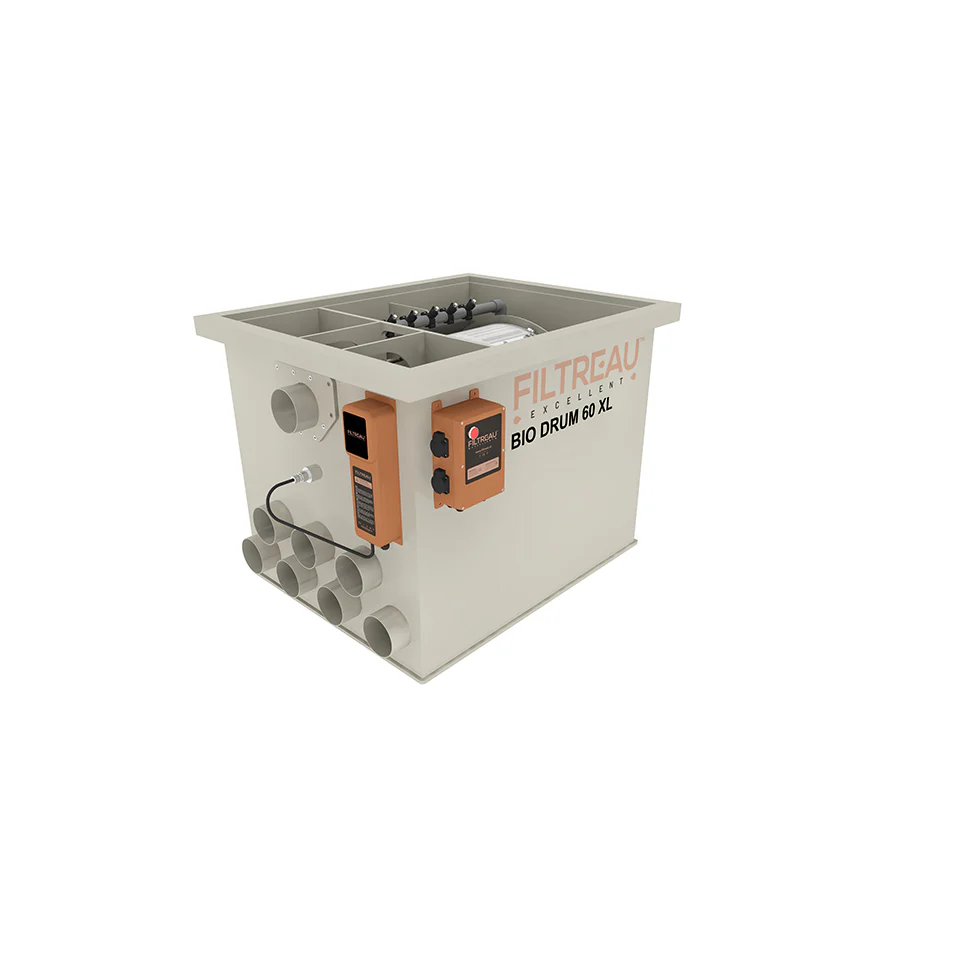
Drum Filters (e.g. 70-micron screen systems)
Drums self-clean automatically when the screen blocks.
Your job:
- Check spray bars weekly
- Inspect waste chute
- Deep clean the drum body only when recommended by the manufacturer
If the drum is cycling too often, something upstream may be increasing debris load.
Sieve Filters
Sieves physically remove solids before bio-filtration.
Clean:
- Screen daily to weekly depending on load
- Immediately if flow drops
They’re simple but need consistent attention.
Moving Bed or Biological Chambers
Bio-media should not be cleaned routinely.
Only rinse if:
- Media is clogged with sludge
- Flow through the chamber is restricted
Use pond water and keep disturbance minimal.
Signs Your Filter Needs Attention
Watch for:
- Reduced return flow
- Rising ammonia or nitrite
- Cloudy water
- Excess sludge in chambers
- Strong odour from the filter
If water tests are stable and flow is strong, you’re probably on track.
Pro Tip: Don’t Deep Clean Everything at Once
Cleaning every chamber in one go removes too much beneficial bacteria.
Instead:
- Stagger cleaning across weeks
- Leave bio-media alone where possible
- Never replace all media at the same time
Your pond’s bacteria need continuity to stay effective.
UV-C Maintenance Reminder
If you run a UV-C clarifier:
- Replace the lamp annually (even if it still glows)
- Clean the quartz sleeve when you service the filter
- Always unplug before opening
- Avoid looking directly at an operating UV-C lamp
A working UV-C keeps green water under control, but only if maintained.
What Happens If You Clean Too Often?
Over-cleaning can cause:
- Ammonia spikes
- Cloudy water after maintenance
- Stressed fish
Your pond needs stability more than it needs perfection.
A Simple Rule of Thumb
Clean when performance drops – not just because the calendar says so.
Check flow weekly, test water regularly and adjust to the season. Heavily stocked koi ponds demand more attention than lightly stocked wildlife ponds.
Clear water, happy koi and less hassle come from steady maintenance, not constant tinkering.
If you’re unsure about your filter type or cleaning routine, tell us your pond size and setup – pump-fed or gravity-fed – and we’ll help you fine-tune it.