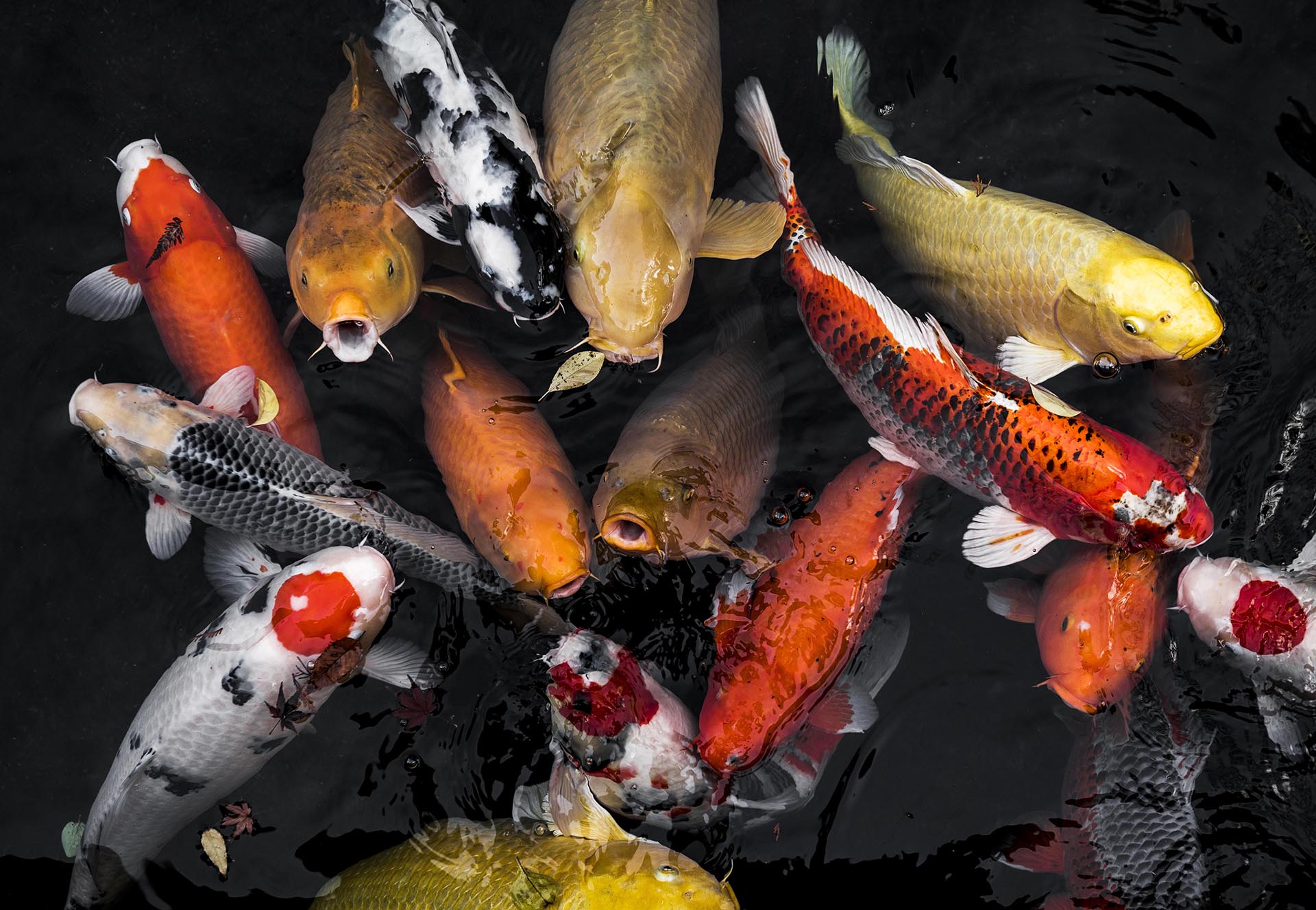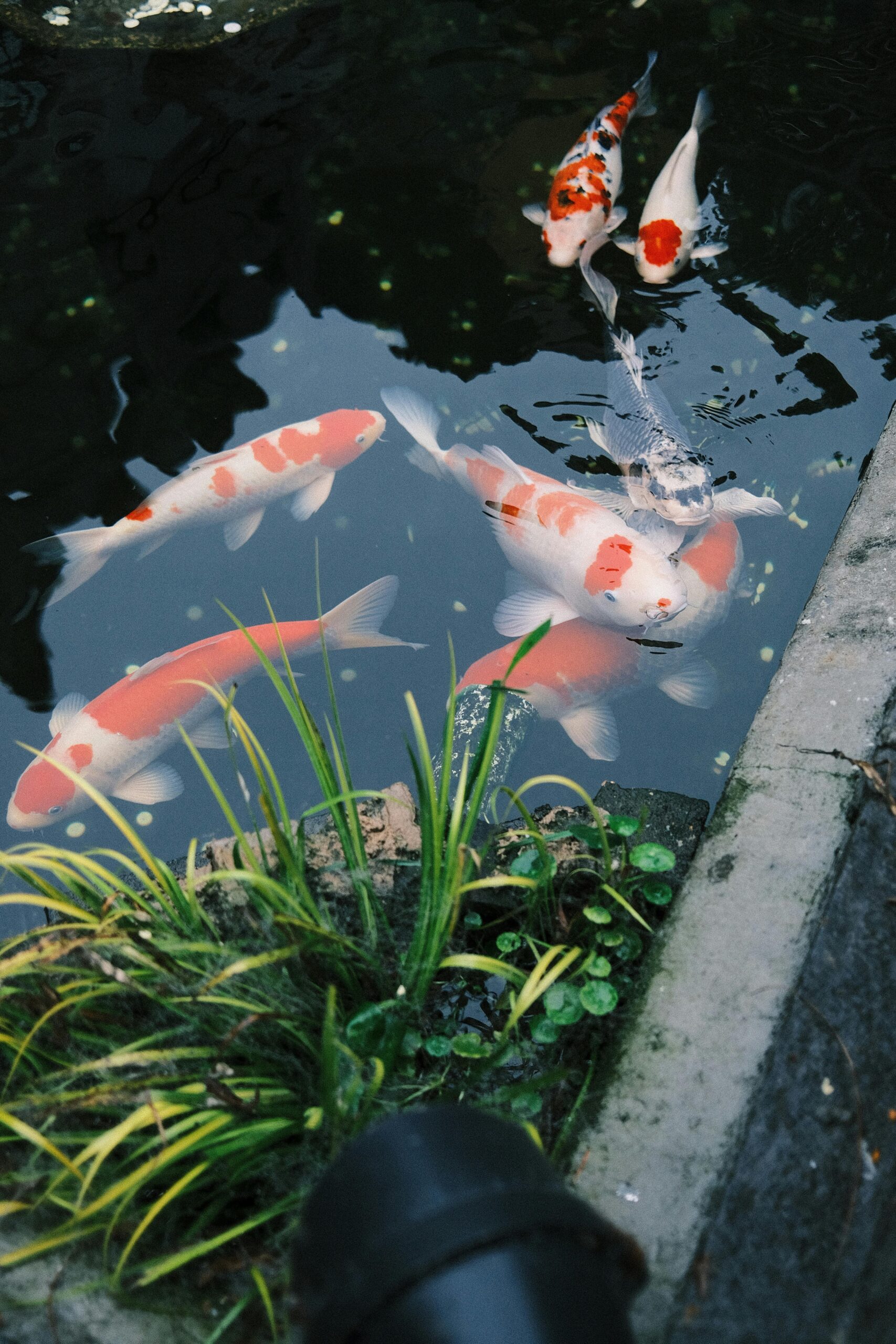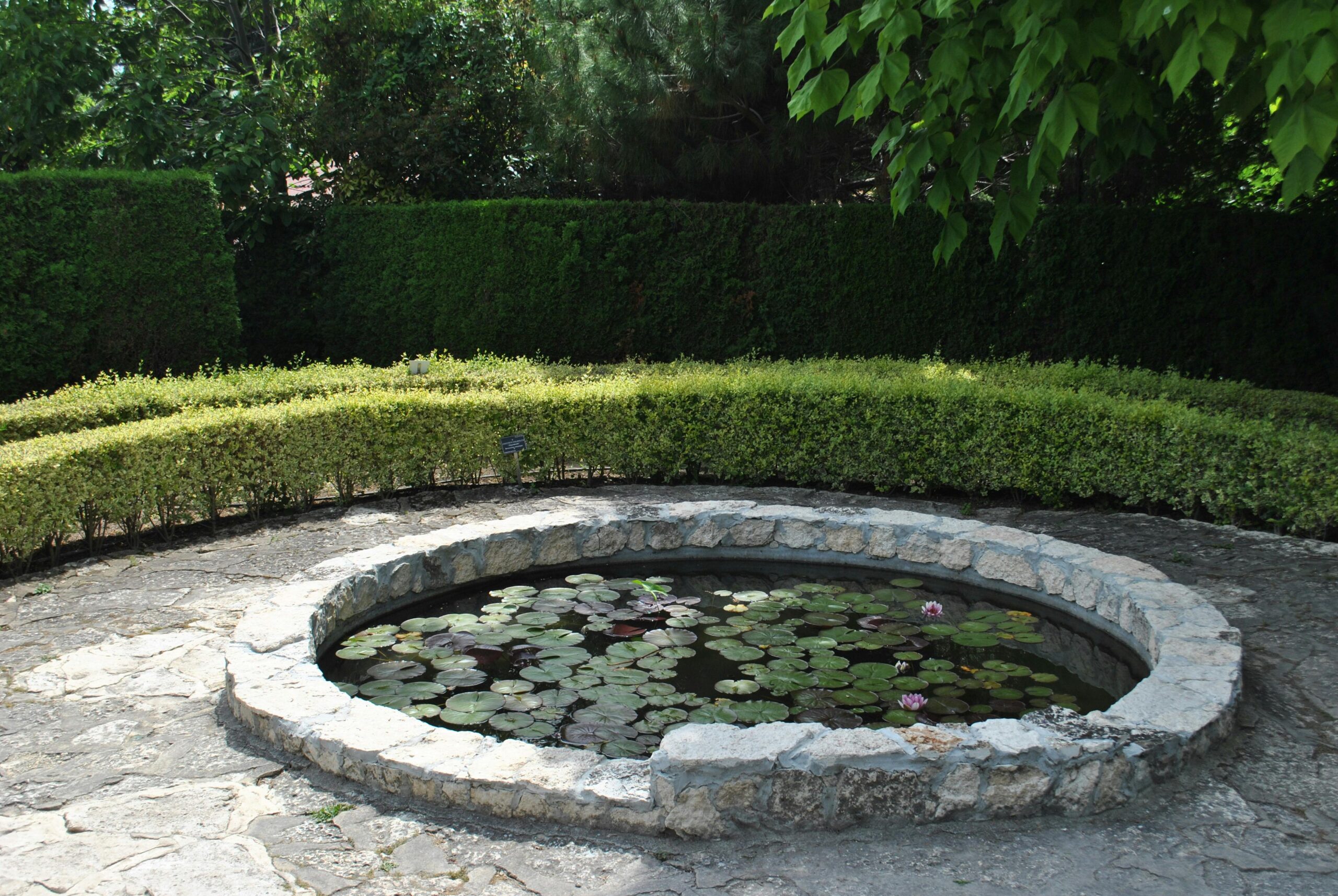
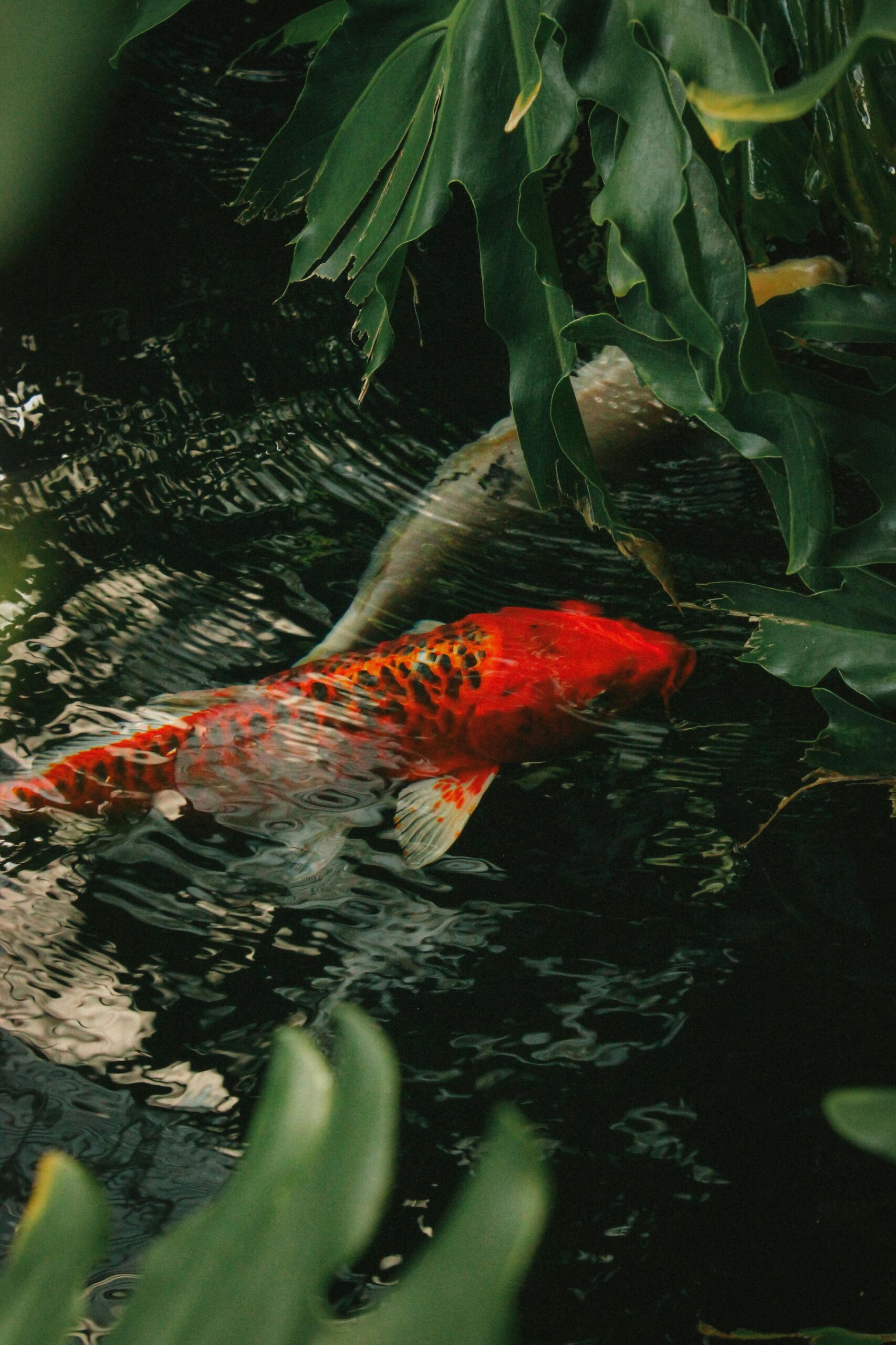
Most koi pond problems are baked in before the first spade hits the ground. Size too small, filters squeezed in as an afterthought, pipework that can’t be upgraded without ripping everything out. Good planning avoids all of that. Get the layout, depth and filtration concept right now and the build itself becomes far simpler.
Start With the End in Mind
Koi don’t stay small and they don’t live short lives. A healthy koi can reach 60–80 cm over time and live for decades. Planning a pond around tiny starter fish is a fast route to overcrowding, water quality issues and expensive rebuilds.
Ask yourself:
- How many koi do you realistically want to keep long term?
- Are you aiming for growth and enjoyment, not just decoration?
- Do you want a system that’s easy to maintain year after year?
Designing for adult fish means more water volume, better waste removal and more stable water conditions. It’s easier to build this in now than try to fix it later.
Pond Size and Depth
A common surprise for first-time builders is that larger ponds are often easier to manage than small ones. More water dilutes waste, buffers temperature swings and gives koi room to swim naturally.
Depth matters as much as volume. Deeper water stays cooler in summer and warmer in winter, reduces stress during heatwaves and cold snaps and gives koi a sense of security.
Shallow ponds warm quickly, cool quickly and show water quality problems faster. While garden size always plays a role, prioritising depth where possible pays off long term.
Surface area is important for viewing and gas exchange, but it’s total volume that gives you breathing space when feeding increases or a filter needs attention.
Gravity‑Fed or Pump‑Fed? Decide Early
This is one of the most important planning decisions and it affects almost everything else.
Gravity‑Fed Systems
Water flows by gravity from bottom drains to the filter. Clean water is then pumped back to the pond.
Why people choose it:
- Excellent waste removal
- Less debris chopped up by pumps
- Easier to run high-performance filtration
What it affects:
- Pond depth
- Filter bay height
- Pipe sizes and routes
Pump‑Fed Systems
A pump sits in the pond or skimmer and pushes water to the filter.
Why people choose it:
- Simpler builds
- Works well where digging depth is limited
- Often suits smaller ponds
What it affects:
- Pump accessibility
- Pre-filtration needs
- Maintenance routines
Neither approach is “right” or “wrong”, but you need to choose early. Changing later usually means major rework.
Filtration the Heart of the Pond, Not an Add-On
If the pond is the body, filtration is the heart and lungs combined. Koi produce a lot of waste and no amount of water changes can replace proper filtration. At the planning stage, focus on function, not brand names.
A koi filtration system needs mechanical filtration to remove solid waste and biological filtration to break down harmful ammonia and nitrite.
Filters need space, access and straight pipe runs. Trying to hide them behind a fence or squeeze them into a tiny corner often leads to awkward maintenance and compromised performance.
Plan for:
- Enough room to stand and work
- Space to remove lids, screens or media
- The possibility of upgrading later without rebuilding everything
Bottom Drains, Returns and Pipework Layout
Pipework is the skeleton of the pond. Once it’s buried, changing it is both difficult and expensive.
Bottom Drains
Bottom drains continuously pull waste from the deepest part of the pond. They reduce manual cleaning and improve overall water quality.
Planning considerations include:
- Number of drains based on pond size and shape
- Correct positioning to avoid dead spots
- Straight, smooth pipe runs to the filter
Returns and Circulation
Clean water needs to return to the pond in a way that supports circulation.
Good planning looks at:
- Direction of returns to move waste towards drains
- Avoiding stagnant corners
- Balancing flow across the pond
Sketching this out before digging helps you visualise how water will move, not just where it will sit.
Location, Levels and Access
Where the pond sits in the garden affects more than just the view.
Sun exposure: Full sun all day can push water temperatures up in summer and encourage blanketweed. Some sun is fine, but constant exposure needs planning.
Trees: Overhanging trees mean leaves, pollen and shade. Roots can also complicate digging.
Access: You’ll be cleaning filters, checking pumps and doing water changes for years. Make sure filters bays are easy to reach, lids can open fully and planting is out of the way in case something needs attention.
Levels: Gravity-fed systems rely on precise water levels. Pond height, filter height and ground slope all matter and need to be planned together.
Electrics, Water Supply and Practicalities
These details are easy to overlook until it’s too late.
Electrics
Ponds rely on pumps, UV-C units and sometimes air pumps. Outdoor electrics must be safe and suitable for permanent use.
- RCD protection is essential
- Sockets should be accessible but protected
- Always plan cable routes before concrete is poured
Water supply
You’ll need a convenient way to top up and carry out water changes. Dragging hoses through the house becomes frustrating fast, increases the risk of spills and damage and often puts people off regular maintenance.
Waste water
Filters need cleaning. Plan where dirty water will go so you’re not flooding flowerbeds or paths, especially during winter when ground drainage is slower and runoff can become a real nuisance.
Budgeting for the Whole System
A koi pond is a system, not a collection of parts. Cutting corners on hidden elements like filtration, pipework or electrics often leads to higher costs later.
A realistic budget includes:
- Groundwork and waste removal
- Filtration and pipework
- Electrics and water access
- Liner or construction materials
- Contingency for the unexpected
Spending more on planning often saves far more than it costs.
Plan It on Paper Before You Pick Up a Spade
Before digging, follow these steps:
- Draw the pond shape with dimensions
- Mark drain positions and pipe routes
- Sketch the filter bay and equipment layout
- Measure levels and heights carefully
You don’t need architectural drawings, just a clear plan. Talking it through with a specialist at this stage can highlight issues that aren’t obvious on site.
Once the hole is dug, your options narrow quickly.
Build Once, Enjoy It for Years
A well-planned koi pond is quieter, cleaner and easier to deal with. Maintenance becomes routine rather than reactive. Fish stay healthier and upgrades are simple instead of disruptive.
Take your time at the planning stage. When you finally start digging, you’ll know every shovel of soil is taking you closer to a pond that works as well as it looks.
Clear water, relaxed koi and less hassle start long before the build begins.